Thursday, November 12, 2026

Kagiso Patrick Mautloa

 Biography record

Kagiso Patrick Mautloa

BORN
24 September 1952
UPDATED
23 Aug 2019
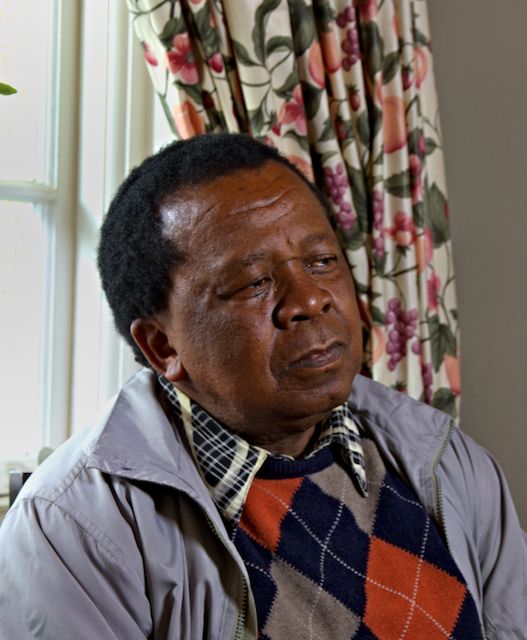
Kagiso  Patrick   Mautloa portrait

SUMMARY

Artist and graphic designer

Kagiso Patrick (called Pat) Mautloa was born 24 September 1952 in Ventersdorp, Western Transvaal. Mautloa's family moved to Soweto in 1954. He attended Mehlaleng Lower Primary School, Fred Clarke Higher Primary School, Leratong Higher Primary School and Morris Isaacson High School all in Soweto. While still at high school, Mautloa studied art at the Jubilee Art Centre in 1969 and 1970 and at Mofolo Park Arts Centre. When he left school in 1972 he continued studying at Mofolo until 1975. He worked as an insurance clerk until 1977. In 1970 he was awarded an OK Bazaars Bursary which he took up at Rorke's Drift where he studied for two years beginning in 1978. In 1980 he began working for the OK Bazaars as a junior graphic artist and during this time also taught art part-time at the Mofolo Arts Centre and at FUBA. In 1981 Mautloa joined the SABC as a graphic designer. Mautloa is a committee member of the Thupelo Art Project and has participated in the yearly workshops. His work has been exhibited at the UFH Annual Exhibitions and the UZ African Art Festival Exhibitions. He currently lives in Alexandra, and produces commerical graphic design as well as his own art work. He is married to artist Bongi Dhlomo.


Exhibitions:

1984: Grassroots Gallery, Westville, Natal (Six Johannesburg Artists).

1985: FUBA (USSALEP - FUBA Workshop Exhibition). Afhcana Museum in Progress, Johannesburg (Tributaries).

1986: Goodman Gallery (Transitional Art). WITS (Thupelo Workshop Exhibition).

1987: Johannesburg Art Foundation; NSA, Durban; National Museum and Art Gallery, Gaborone, Botswana (Thupelo Workshop Exhibition).

1988: Cassirer Fine Art Johannesburg (group).

How we know this

  1. 01Sack, S. (1988). The Neglected Tradition, Johannesburg: Johannesburg Art Gallery.

LAST UPDATED · 23 AUG 2019

CITE THIS ENTRY

South African History Online. (2011, February 17). Kagiso Patrick Mautloa. South African History Online. https://sahistory.org.za/ref/B-0008501

Sokhaya Charles Nkosi

Biography record

Sokhaya Charles Nkosi

BORN
27 January 1949
UPDATED
23 Aug 2019
Sokhaya  Charles Nkosi portrait

SUMMARY

Graphic artist

Sokhaya Charles Nkosi was born on 27 January 1949 in Durban.From 1974 to 1976 Nkosi studied painting, graphics, sculpture, weaving and ceramics at Rorke's Drift. From 1977 to 1980 he worked full-time at his art at Mariannhill. From 1980 to 1981, he taught art at the Open School, Durban. Between 1982 and 1986 he was employed as a graphic artist by the SABC. Since 1986 he has been a senior tutor at the AIA, FUNDA, teaching drawing and painting to diploma students.


Exhibitions:

1974: Sweden (Rorke's Drift, organised by Otto Lundbohm).

1975: DAM (Art SA Today).

Durban (Black Expo, organised by Don Joseph, an art teacher in Chatsworth).

1977: NSA, Durban (three-person exhibition with Duke Ketye and Michael Ntuli).

1979: UN, Pietermaritzburg (part of centenary celebrations group).

1974-80: UFH (annual group exhibition).

1977-84: UZ (annual group exhibition).

1980: Mariannhill Art Gallery (two-person exhibition with Bongani Shange).

1979-80: NSA””tour (group).

Durban (Black Expo).

1981: Gaborone, Botswana (Culture and Resistance Conference).

1982: Medical University of South Africa (Medunsa) (group).

National Museum and Art Gallery, Gaborone, Botswana

(Art Toward Social Development An Exhibition of SA Art).

1984: U2 (group).

(987: Shell Gallery ('Explorations' joint exhibition with Vincent

Baloyi and AIA students).

TAG (Rorke's Drift Fine Art School in Retrospect).

1988: JAG (Vita Art Now).

Commissions:

1978: Three life-size murals at the Glebe Tavern, Durban (Durban Municipality).

Awards:

1984: UZ Art Exhibition (second prize for painting).

Collections:

KC; Munich Museum of African Art, West Germany; UFH; UZ.

How we know this

  1. 01Sack, S. (1988). The Neglected Tradition, Johannesburg: Johannesburg Art Gallery.

South African History Online. (2011, February 17). Sokhaya Charles Nkosi. South African History Online. https://sahistory.org.za/ref/B-0008806

AI Overview

Sokhaya Charles Nkosi (born 27 January 1949 in Durban / KwaMashu, KwaZulu-Natal) is a prominent South African graphic artist, painter, sculptor, and educator. [1, 2, 3]
Background & Education
  • Birth: 27 January 1949, Durban (KwaMashu), South Africa.
  • Training: Studied at the renowned Rorke's Drift Art and Craft Centre from 1974 to 1976, focusing on painting, graphics, sculpture, weaving, and ceramics. [1, 2]
Career & Teaching
  • Mariannhill & Open School: Worked as a full-time artist at Mariannhill (1977–1980) and taught art at the Open School in Durban (1980–1981). [1]
  • SABC: Served as a graphic artist for the SABC from 1982 to 1986. [1]
  • Funda Centre & AIA: Became a senior tutor in drawing and painting at the African Institute of Art (AIA) at the FUNDA Centre in Soweto, mentoring generations of South African artists. [1, 2]
Artistic Style & Themes
  • Black Consciousness & Theology: Nkosi's work is deeply rooted in Black consciousness, spirituality, and Black theology, using expression and form to document life, struggle, and dignity under and after apartheid. [1, 2]
  • Healing Time Scripts: Critics and historians often describe his portfolio not merely as "township art," but as "healing time scripts" that record Black expressive modes, resistance, and resilience. [1, 2]
  • Notable Works & Series:
    • Crucifixion series (1976)
    • Drumbeat (Congo Drummist) (1979)
    • Soweto at Dawn (1979)
    • Wishful Thinking (1995, relief etching)
    • The Abating of the Storm (2001)
    • Resilience (2006) [1, 2, 3]
Collections & Legacy
  • His work is featured in prominent institutions including the South African History Online archive, the SABC Art Collection, the Bronx Museum, the Constitutional Court Art Collection (CCAC), and international collections in Munich and beyond. [1, 2, 3, 4]
  • His life and legacy have also been celebrated through collaborative exhibitions (such as Neighbours with Vincent Baloyi) and documentary projects like Beyond The Brush: Charles Nkosi and The Art of Legacy by AFDA. [1, 2]

Vincent Baloyi - The Rockville Master

Biography record

Vincent Baloyi

BORN

4 February 1954

UPDATED

23 Aug 2019


Vincent Baloyi Image source

SUMMARY

Artist

Vincent Baloyi was born on 4 February 1954 in Newclare, Johannesburg. Baloyi first attended school in Soweto where his family moved in 1961. He studied art at the Fred Clarke Higher' Primary School in Soweto and completed Standard VI. In 1972 he met Eric Mbatha and began studying under him at the YWCA in Dube, Soweto. In 1974 Baloyi embarked on the two-year course at Rorke's Drift. On completion of the course the following year, Baloyi joined the National Arts Society and the SAAA 'and began working full-time as an artist. In 1981 he began teaching art, at the Open School until 1986 and then at FUBA until 1987. In 1986 he joined FUNDA as a Guest Artist. He is currently the technical assistant at FUNDA and periodically teaches sculpture.


Curriculum Vitae

Exhibitions:

1974: Sweden (Rorke's Drift) Evangelical Lutheran Church - ELC Art and Craft Centre.

African Art Centre, Durban (Black Expo).

American Embassy, Pretoria.

1975: City Hall, Durban (Black SA Today).

DAM (Art SA Today).

1976: SA Institute of Race Relations, Johannesburg (three-person with Nats Mokgosi and Dumisani Mabaso).

Greece; Israel; West Germany; USA; London, UK (group exhibition organised by the National Arts Society).

SAAA Johannesburg (Rorke's Drift).

1979: Bonn and West Germany ”” tour (Art from SA/Art from Soweto).

1987: Shell Gallery, Johannesburg ('Explorations' exhibition of work by Sokhaya Nkosi, Vincent Baloyi and AIA students).

FUBA (group).

1988: JAG (Vita Art Now).

FUBA (solo).

SA”” tour (Cape Town Triennial).

Awards:

1976: SAAA, Johannesburg (first prize for etching).

Collections:

DAM; FUBA; FUNDA.

CITE THIS ENTRY

APA 7thHarvardOxfordMLA 9thChicago

Credit:

South African History Online. (2011, February 17). Vincent Baloyi. South African History Online. https://sahistory.org.za/ref/B-0007817

Ben Arnold

Ben Arnold

Ben Arnold converted to the Islamic faith in 1981. He grew up among Muslims in Albertville and was drawn to the Islamic faith early in his life. Despite his upbringing in a Protestant home, the ecstatic dancing of dervishes captivated his imagination. His parents were respected members of the Dutch Reformed Church in which his father served as an elder.


This drawing (plate 110), the sole work by Arnold in the Campbell Smith Collection, was formerly entitled Crucifixion. It was purchased from the Grosvenor Gallery, London. The real title is in fact Dervish, according to recent confirmation with the artist himself.1This misnomer apparently derives from a review of Arnold’s first solo exhibition at the Egon Guenther Gallery in Johannesburg in m1964. Cecil Skotnes (qv.) wrote a review of the exhibition and referred to the ‘excellent linear quality in the preliminary sketches for the Crucifix’.2


This misinterpretation can also be ascribed to the involvement of the Polly Street artists with several commissions for the Catholic Church, where every ascetic, attenuated body with outstretched arms fitted into the Christian paradigm. Consequently, the author was also misled in a recent publication on the Polly Street Art Centre.3


Arnold is basically a sculptor and he works predominantly in clay. As a child he collected clay from the spruit that runs through Albertville. Later at the art centres in Polly and Eloff Streets, brick clay suited his needs. Subsequently his first commissions were carried out in terracotta. His drawings, suggestive of sculptures in progress, are autonomous works of art. They were predominantly done in the 1960s and 1970s.


Dervish evokes the different malleable options of clay, despite being a drawing. It is simultaneously tangible form and elusive movement. Across an even background the dancer whirls upwards and stretches sideways freeing himself from all material confines in remembrance of the Creator. The fading away of head, hands and feet sustain the esoteric nature of the drawing and foreshadows the gradual disappearance of figurative imagery from Arnold’s later art.


Elza Miles

Citations

  1. 1. Author communication, 4 June 2005.
  2. 2. The Star, 11 June 1964.
  3. 3. Elza Miles. 2004. Polly Street: The Story of an Art Centre. Ampersand Foundation: Johannesburg. pp. 118–120.

Works by Ben Arnold in the Collection

Kagiso Patrick Mautloa

  Biography record Kagiso Patrick Mautloa BORN 24 September 1952 UPDATED 23 Aug 2019 SUMMARY Artist and graphic designer Kagiso Patrick (cal...